Over the past decade, social platforms have transformed from simple communication tools into immersive digital ecosystems. This transition has been significant for adults, while for children and adolescents, it has fundamentally transformed their experiences. Contemporary youth are developing in digital environments that influence their relationships, sense of self, mental wellbeing, and everyday habits, frequently in ways that may be difficult to comprehend or regulate fully.
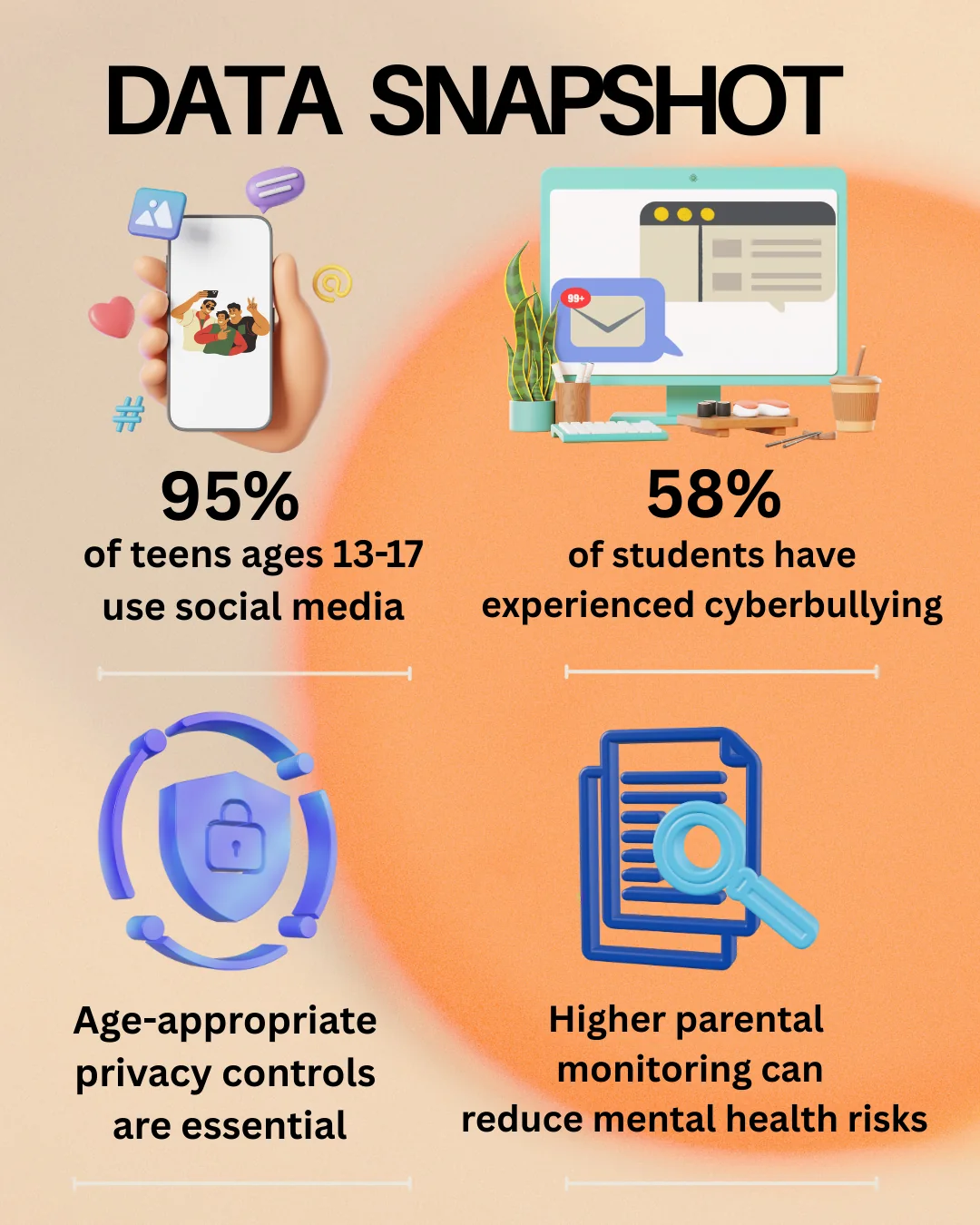
Research continues to highlight the risks. The U.S. Surgeon General reports that up to 95% of teens ages 13–17 use social media, and nearly one-third say they are online “almost constantly.” Heavy use is linked with increased anxiety, depression, and body image concerns. Teens who use social media for more than three hours daily are twice as likely to experience depression or anxiety. Most studies report that teens spend 3.5 to 5 hours per day on these platforms, raising valid concerns.
At the same time, online harms like cyberbullying, predatory behavior, and viral “challenges” have become more visible. Cyberbullying alone has surged: national surveys show that 58% of students have experienced cyberbullying at some point in their lives, up from 33% in 2016. In 2025, 32.7% of students reported being cyberbullied in just the past 30 days. These numbers reflect a digital environment that is not built with children’s developmental needs in mind.
All of this makes one thing clear: young users need more than passive guidance. They need real guardrails.
Why Child Safety Requires More Than Good Intentions
Child safety in digital spaces cannot rely on hope, trust, or after-the-fact intervention. It requires intentional design, thoughtful policy, and built-in protections that anticipate risks before they escalate.
This is where robust app controls and age-appropriate privacy features come in. These tools are not “nice to have.” They are essential infrastructure for a healthier online environment, the digital equivalent of seatbelts and traffic lights.
Age-Appropriate Privacy Defaults: A Non-Negotiable Starting Point
Children should not be treated like adult users. Their data, visibility, and interactions require stronger protections by default.
What the data shows
Children’s data is collected at staggering levels. One analysis found that an average of 72 million data points are collected on a child before they turn 13.
- 90% of child-directed websites embed trackers that collect behavioral data.
- 73% of popular apps used by children contain deceptive design patterns that nudge them into sharing more information or staying online longer.
What platforms should do
Age-appropriate privacy defaults should include:
- Private profiles by default
- Non-discoverability by strangers
- No targeted advertising
- Minimal data collection
- Clear, child-friendly explanations of what data is used and why
Parents should not be expected to navigate complex settings menus to ensure their children’s safety. It is the responsibility of platforms to provide comprehensive protections by default.
Content Filtering and Behavior Monitoring: Proactive, Not Punitive
AI-driven tools can play a meaningful role in identifying harmful behavior early, but only when used responsibly.
The importance of AI tools
Cyberbullying, harassment, and self-harm content are widespread:
- 16% of high school students were electronically bullied in 2023.
- Girls experience cyberbullying at nearly twice the rate of boys (21% vs. 12%).
- Among cyberbullying victims, two-thirds say it negatively affected their self-esteem.
AI systems can help detect harmful language, bullying patterns, signs of grooming, and self-harm indicators. But these systems must be:
- Transparent: Kids and parents should know what is being monitored.
- Respectful: Systems should not read private messages unnecessarily.
- Support-oriented: The response should offer resources, not punishment.
The goal is early intervention, not surveillance.
Parental Controls: Moving Beyond Screen Time
For years, parental controls focused almost exclusively on limiting screen time. But time alone doesn’t tell the whole story. Understanding what children do online is just as important as how long they’re online. That’s why modern parental tools should offer insight into app activity, not just screen time totals.
Modern parental controls should offer:
- Visibility into friend requests
- Alerts about changes to privacy settings
- Notifications about attempts to access age-inappropriate content
- Insights into how apps are used, not just how long
This isn’t about spying. It’s about partnership. Parents deserve tools that help them guide their children’s digital lives with the same care they apply offline.
Research shows that heavy social media use is linked to higher rates of depressive symptoms in teens and that strong parental monitoring can significantly reduce these risks.
Education and Empowerment: The Human Layer of Safety
Technology alone cannot keep children safe. Education and digital literacy are equally important.
Children should learn:
- What healthy online behavior looks like
- How to recognize manipulation, grooming, or scams
- How to report harmful content
- How to set boundaries and protect their privacy
This is especially critical as AI-driven scams and impersonation tactics become more sophisticated. Children are increasingly targeted with fake messages, deepfake audio, and “too good to be true” offers designed to trick them into sharing personal information or clicking harmful links.
Teaching kids to pause, verify, and ask for help is one of the most powerful safety tools we can give them.
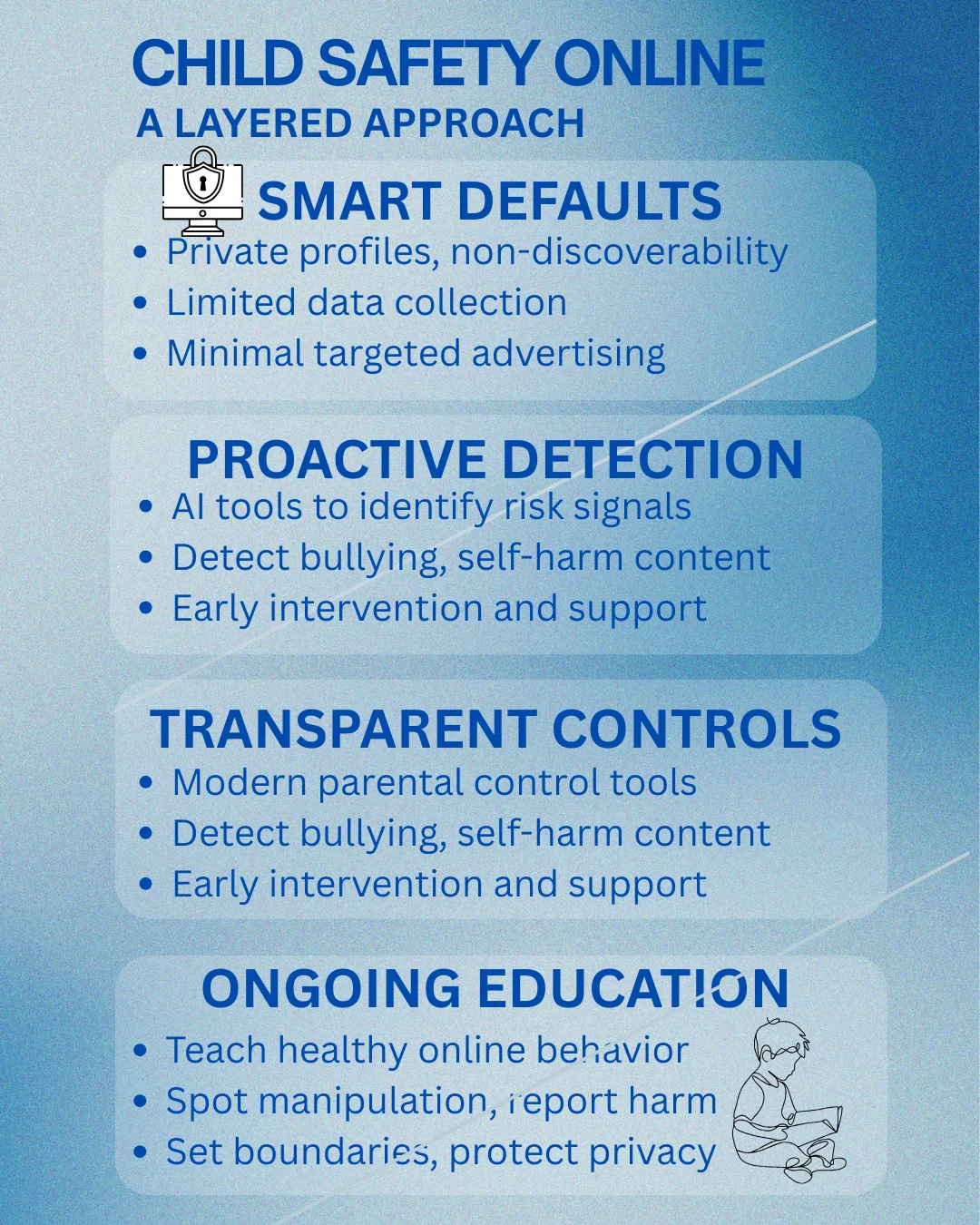
A Layered Approach: The Path to a Safer Digital Future
Protecting young users requires multiple layers working together:
- Smart DefaultsPrivate profiles, limited data collection, and non-discoverability.
- Proactive DetectionAI tools that identify risk signals early and offer support.
- Transparent ControlsParent-child partnerships supported by modern, intuitive tools.
- Ongoing EducationDigital literacy that empowers children to navigate online spaces safely.
The digital world isn’t going away, and neither are the risks. But with thoughtful design, responsible governance, and a commitment to child-centered technology, we can build online environments that support children’s growth rather than undermine it.
References
- U.S. Surgeon General: Social Media and Youth Mental Health
- American Psychological Association: Teen Social Media Use and Mental Health
- Cyberbullying Research Center: Research Summary
- OHCHR: Privacy in the Digital Age submission
- South Denver Therapy: Bullying and Cyberbullying Statistics
- Security.org: Cyberbullying Facts and Statistics
- Tech Times: Protecting Children from AI Scams